
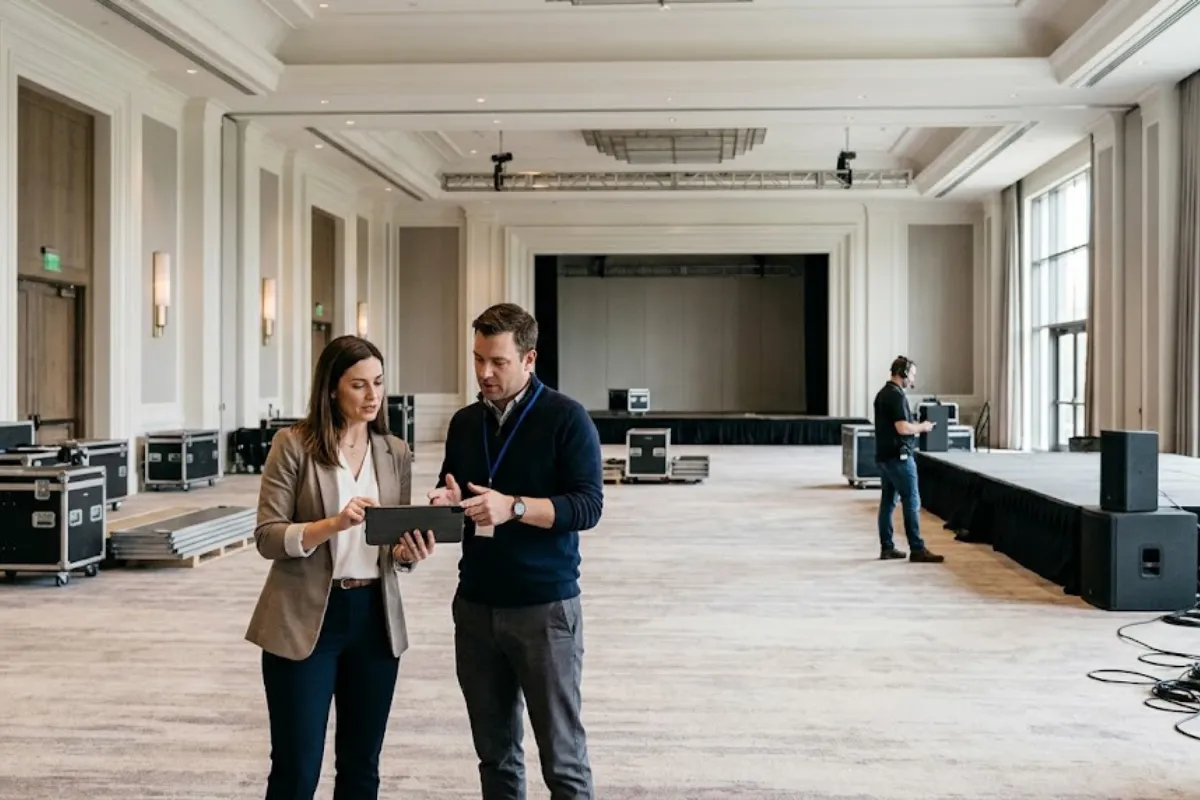
Choosing the right venue involves more than finding an attractive space with enough room for your guests. Behind every successful corporate event is a venue that can accommodate the technical equipment, production schedule, and logistical requirements needed to bring everything together.
From loading access and electrical power to staging, acoustics, and internet connectivity, evaluating a venue’s production capabilities before signing a contract can help prevent costly complications. A thorough site visit gives event planners and production teams the opportunity to identify potential challenges and make informed decisions.
If you’re still exploring locations, check out our guides to corporate event venues in Baltimore and Orlando for additional planning inspiration.
Bringing the right people to a venue walkthrough can help identify potential production challenges before they become problems. Along with the event planner, consider including an event producer, audiovisual specialist, or technical director who understands the equipment and setup requirements.
A production professional can evaluate details that may be overlooked during a typical venue tour, such as ceiling height, electrical access, freight elevators, and equipment placement.
If your production partner cannot attend, request detailed floor plans, technical specifications, and photos of loading areas to review together afterward. Bringing a draft event schedule can also help determine whether the space accommodates your production timeline. Our conference run-of-show template can help with this process.
Getting equipment into and out of a venue is an essential part of event production. Limited access, narrow hallways, and restricted loading times can affect equipment choices, staffing, and setup schedules.
During your site visit, ask:
Understanding these details early allows your production team to develop a realistic setup schedule and avoid unexpected logistical challenges.
Understanding a venue’s available electrical power is essential when planning lighting, sound, video, and other production equipment. Different event setups require different amounts of power, so it’s important to confirm what the venue can support.
Questions to ask include:
Share the venue’s electrical specifications with your production partner before finalizing equipment plans. This helps determine whether additional power distribution or adjustments are necessary.
For more information about lighting considerations, explore our corporate event lighting guide.
Ceiling height, structural restrictions, and available floor space can influence everything from stage design to lighting and video displays.
If your event includes trussing, suspended lighting, projection screens, or large decorative elements, it’s important to understand what the venue allows.
Ask the venue:
Never assume that a ceiling or structural feature can support suspended equipment. Request the venue’s written rigging policies and have a qualified production professional evaluate the proposed setup.
Learn more about ESG’s staging and trussing solutions when planning your event layout.
The acoustics of a venue can affect everything from keynote presentations to live entertainment. During your site visit, evaluate how sound travels throughout the room and whether nearby spaces could create unwanted noise.
Consider the following:
A room with challenging acoustics may require adjustments to speaker placement, sound equipment, or seating arrangements. Identifying these concerns early helps your production team recommend appropriate solutions.
Explore our sound equipment rentals for additional information about professional audio options.
Reliable internet access is especially important for corporate conferences, hybrid events, livestreams, and presentations that depend on online content.
Before booking, confirm that the venue’s connectivity options can support your event’s technical requirements.
Questions to ask include:
If your event involves livestreaming or hybrid presentations, consider testing the connection during your site visit. Discuss backup connectivity options with your production partner in case the primary connection becomes unreliable.
Your venue contract should account for more than the hours guests will be attending. Production crews often need additional time for equipment setup, sound checks, rehearsals, and breakdown.
Before signing, clarify:
Allowing enough time for rehearsals and technical testing can help reduce last-minute complications. Confirm these arrangements in writing so the event schedule reflects the venue’s actual availability.
Safety and accessibility should be considered throughout the venue selection process. Understanding the venue’s emergency procedures, capacity limitations, and accessible facilities helps create a more organized and welcoming event environment.
Important questions include:
Make sure staging, audiovisual equipment, and event decorations do not obstruct emergency exits or accessible pathways. For additional guidance, the ADA National Network’s planning guide for accessible temporary events discusses venue accessibility considerations, while OSHA’s emergency preparedness resources provide information about emergency planning.
Behind-the-scenes areas are just as important as the main event space. Production crews, catering teams, speakers, and vendors often share hallways and preparation areas, making coordination essential.
Ask whether the venue provides secure equipment storage, a designated green room, and appropriate preparation areas for speakers or performers. Confirm whether outside vendors are permitted or whether the venue requires specific service providers.
Consider how catering equipment, food service, and staff movement may affect production access. Understanding these arrangements ahead of time can help prevent congestion and keep equipment, vendors, and event staff organized throughout the day.
A successful event starts long before guests arrive. Taking the time to evaluate a venue’s loading access, electrical capabilities, staging options, acoustics, and production requirements can help prevent unexpected challenges and keep your event running smoothly.
At Event Solutions Group, we provide professional audiovisual equipment and event production services to help bring corporate events to life. Whether you’re planning a conference, corporate gathering, or large-scale production, having an experienced team involved in the planning process can make a difference.
Contact Event Solutions Group to discuss the production needs for your upcoming event.
"*" indicates required fields