
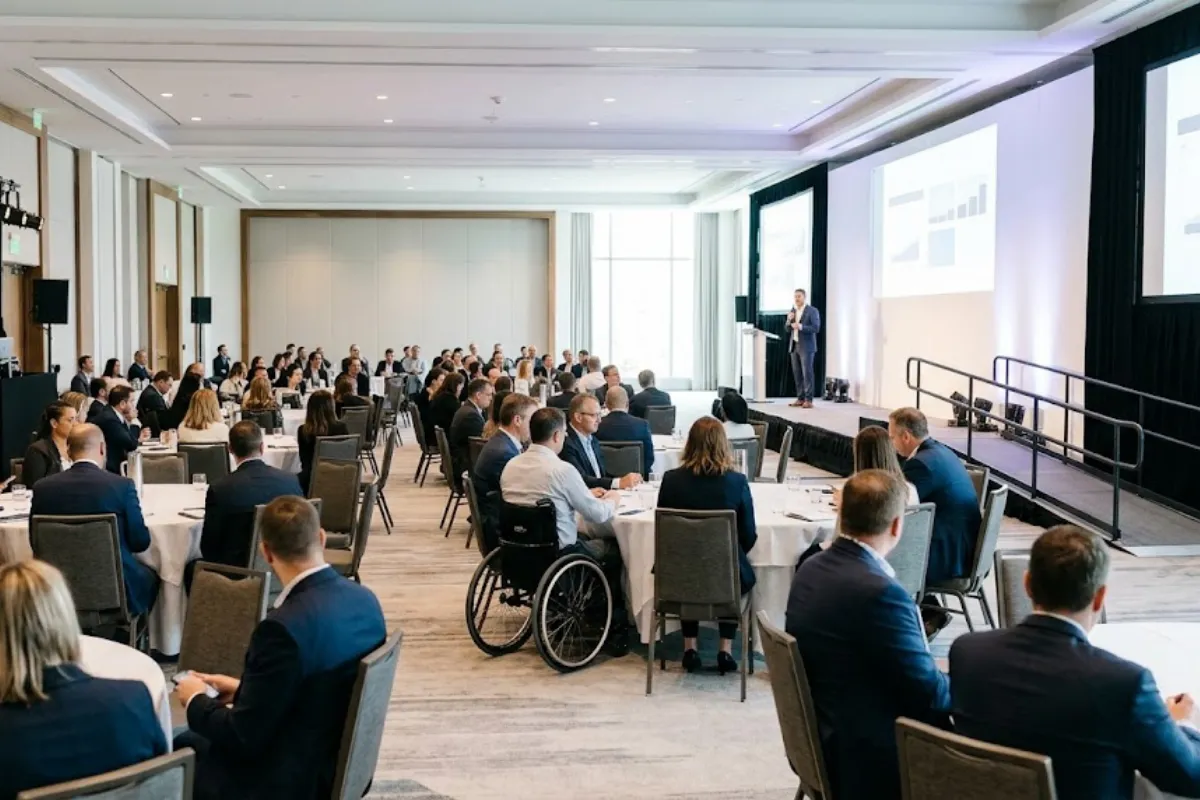
Planning a successful corporate event means creating an experience where every attendee feels welcome, comfortable, and able to participate. Accessibility should be considered from the beginning of the planning process, not treated as an afterthought.
From accessible seating and venue layouts to clear audio, captioning, and audiovisual equipment, thoughtful preparation can make a significant difference in the guest experience. Whether you’re organizing a company conference, corporate gathering, or large-scale event, understanding accessibility considerations can help you create a more inclusive environment.
For additional event planning guidance, explore our guide to planning a corporate event.
Accessibility begins before attendees arrive. Registration is an opportunity to understand accommodation requests, communicate important details, and help guests prepare for the event.
When organizing registration, consider the following:
Encourage attendees to submit accommodation requests in advance so there is enough time to coordinate arrangements. However, event organizers should also have a process for responding to requests that arrive closer to the event.
Choosing the right venue is one of the most important steps in planning an accessible corporate event. Before booking, confirm that the space can accommodate attendees with different mobility and accessibility needs.
Important considerations include:
Whenever possible, visit the venue to assess its layout and accessibility features. Confirm important details with venue management rather than relying solely on promotional materials.
If you’re comparing locations, explore our guides to corporate event venues in Baltimore and corporate event venues in Orlando for additional planning considerations.
Seating arrangements directly influence how comfortably attendees can participate in presentations, discussions, and networking activities.
Accessible seating should be available in appropriate locations throughout the event space rather than being limited to one area. Consider how guests using wheelchairs or mobility aids can sit alongside colleagues, companions, and other attendees.
Clear sightlines are equally important. Guests should be able to see presentation screens, speakers, captioning displays, and sign language interpreters without obstruction. Stage decorations, audiovisual equipment, and other design elements should not interfere with visibility.
Before the event begins, check seating arrangements from different areas of the room. This helps identify potential issues with screen placement, stage visibility, and accessible pathways.
Audiovisual technology plays an important role in helping attendees follow presentations and participate in corporate events. Clear sound, visible screens, and appropriate lighting can improve the experience for a wide range of guests.
Several audiovisual considerations deserve attention:
Testing equipment before the event can help identify technical issues that could affect attendees’ ability to follow the program.
Professional audiovisual support can also help event organizers plan equipment placement, manage presentation technology, and coordinate technical requirements. Explore ESG’s AV equipment and conference planning services to learn more about available production solutions.
Captioning and sign language interpretation can be essential components of accessible corporate events. These services should be discussed early in the planning process to allow enough time for scheduling, coordination, and equipment preparation.
When planning captioning and interpretation, consider where attendees will view captions, whether screens are visible throughout the room, and how interpreters will be positioned and illuminated.
Speakers should also provide presentation materials in advance when possible. Slides, scripts, and technical terminology can help captioners and interpreters prepare for the event.
For hybrid or virtual events, accessibility planning should extend to remote participants. Consider how captions, audio, and presentation content will be delivered through the event’s online platform.
The U.S. Department of Justice provides additional information about ADA effective communication requirements, including auxiliary aids and services such as captioning and interpretation. Appropriate accommodations depend on the event and applicable legal requirements.
Corporate events often include music, lighting effects, crowded spaces, and busy schedules. While these elements can contribute to the atmosphere, they may also create challenges for attendees with sensory sensitivities.
Consider notifying guests in advance about loud music, flashing lights, haze, or other special effects. Providing quieter areas for breaks and maintaining comfortable sound levels can also improve the guest experience.
Scheduling is another important consideration. Allow enough time between sessions for attendees to navigate the venue, use restrooms, and access refreshments without feeling rushed.
Share an accessible event agenda in advance and include reasonable breaks throughout the program. These adjustments can make the schedule easier to follow while supporting attendees with different needs.
Accessible event planning requires communication between everyone involved in producing the experience. Venue staff, audiovisual technicians, caterers, registration teams, and other vendors should understand the accessibility arrangements relevant to their responsibilities.
For example, the audiovisual team may need to coordinate captioning displays and microphone placement, while venue staff manage accessible seating and pathways. Catering teams may need information about dietary accommodations and accessible service arrangements.
Assigning a designated accessibility contact can help centralize communication and prevent important details from being overlooked. This person should be available to respond to questions and coordinate adjustments throughout the event.
Sharing a clear plan before event day helps vendors understand their responsibilities and work together more effectively.
Accessibility planning should continue throughout the event itself. Before guests arrive, walk through the venue to confirm that accessible entrances, pathways, seating areas, and restrooms are ready.
Check that microphones are functioning, presentation screens are visible, and any arranged captioning or interpretation services are properly positioned and operating. Staff should also know whom to contact if an attendee needs assistance or requests an adjustment.
After the event, invite feedback about the accessibility experience. Attendees may identify challenges that were not apparent during planning, such as difficult-to-read screens, unclear audio, or inconvenient seating arrangements.
Reviewing this feedback with your venue and production partners can help improve future events. Accessibility is an ongoing consideration, and each event provides an opportunity to make the experience more welcoming and inclusive.
Creating an accessible corporate event starts with thoughtful planning and attention to the details that shape the guest experience. From seating arrangements and clear audio to captioning, lighting, and audiovisual technology, every element plays a role in helping attendees participate comfortably.
At Event Solutions Group, we provide professional audiovisual equipment and event production services to support corporate events. Our team can help you explore production solutions that support your event’s accessibility goals and create a more welcoming experience for attendees.
Contact Event Solutions Group to discuss the audiovisual and production needs for your upcoming event.
"*" indicates required fields